Emotional, physical and behavioural warning signs, and how burnout differs from ordinary stress
By Caspar Chittenden, Co-founder and Head Coach, Path Community
Mental load burnout in men often shows up as irritability and flatness long before exhaustion. The clearest signs are snapping over small things, losing interest in what used to matter, and tiredness that sleep and days off do not fix. In our 2025 Men’s Wellbeing Survey of more than 800 men, 28% reported signs of burnout in the past year.
Pressure is the norm in the UK. In Mental Health UK’s Burnout Report 2026, based on YouGov polling of 4,502 adults, 91% reported high or extreme pressure or stress in the past year. One in five workers needed time off because of it.
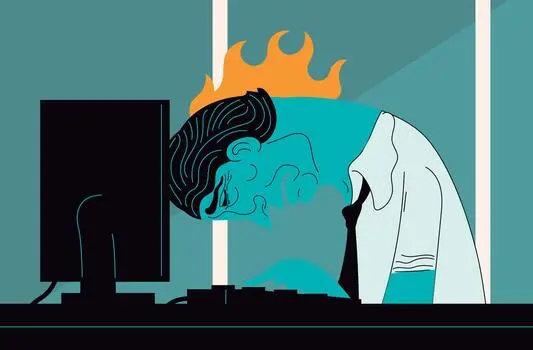
Most men picture burnout as collapsing at a desk. Mental load burnout is quieter, which is why men miss it for years while telling everyone they are fine. Plenty of men look stoic on the outside while drowning underneath.
The signs: a self-check
Tick any that have been true for most of the last month.
Emotional signs
- You snap at your kids or partner over things that would not normally bother you.
- Good news or good moments land flat.
- You feel detached from work you used to care about.
- You dread Monday by Saturday afternoon.
Physical signs
- You are exhausted but cannot switch off at night.
- Your jaw, neck or shoulders stay tight without you noticing.
- A weekend or a holiday no longer restores you.
- You get ill more often than usual.
Behavioural signs
- You reach for your phone, a drink or the TV the moment you stop.
- You cancel plans with friends because it feels like effort.
- Small decisions, such as what to cook, feel too much.
- You work longer hours and get less done.
What your answers mean
A few ticks in one group usually point to a hard patch. Ticks across all three groups, lasting more than a few weeks, point towards burnout. Use the list as a prompt to act. It cannot diagnose anything, so if you also have persistent low mood, see your GP.
Is it burnout or stress?
Burnout and stress pull in different directions. Stress usually feels like too much: urgency, pressure, overdrive. Burnout feels like too little: empty, detached, running on nothing. The World Health Organization describes burnout through three features: exhaustion, growing mental distance or cynicism about work, and a drop in how effective you feel. Mental Health UK adds a useful test. A stressed person still believes things can change. A burnt-out person has stopped believing it.
Can burnout cause physical symptoms?
Burnout commonly causes physical symptoms. Mental Health UK lists constant tiredness, poor sleep, frequent headaches, muscle or joint pain, stomach problems and getting ill more often. If your body has been sending these signals for weeks, take them as seriously as you would a pulled muscle.
How long does burnout recovery take?
Burnout recovery takes months rather than weeks. Mental Health UK puts it anywhere from a couple of months to a couple of years, depending on whether you are still in the situation that caused it and what support you have. Rest alone rarely fixes it, because the load is still waiting when you return. Recovery holds when something about the load itself changes. The three-pile method is a good place to start.
Should I take time off?
Time off helps burnout when you use it to recover and to change something, rather than to catch up on chores. If you cannot face the week, speak to your GP. They can give you a fit note and refer you for support. For a short-term circuit breaker, try the 48-hour reset.
Where to start
Pick one sign you ticked. Say it out loud to one other man this week, in a sentence as plain as “I think I’m more burnt out than I’ve been letting on.” Most men expect to feel exposed when they say it. Most feel understood instead.
Sources
- Mental Health UK, Burnout and the Burnout Report 2026 (YouGov, 4,502 UK adults, November 2025)
- World Health Organization, Burn-out an “occupational phenomenon” (2019)
- Path Community, 2025 Men’s Wellbeing Survey (more than 800 respondents)
Men at Path Community do this together every week. They get uncomfortable, they keep to what they commit to, and they back each other through it. There is a seat for you.
Path Community runs this work every week, online and in person. See OUR EVENTS, explore OUR MODULES, or find out how to join HERE.