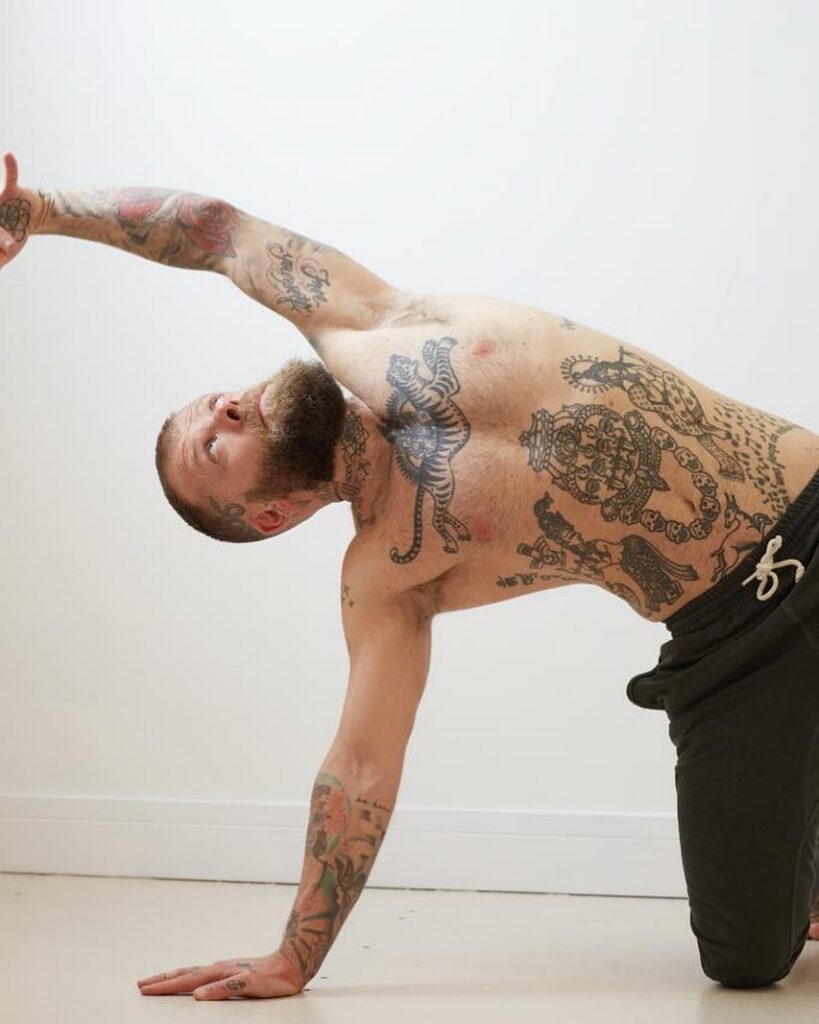
By Eddie J Sullivan, Movement Coach – Path Community
Picture our ancestors for a moment. They never “worked out.” They never needed to. Life itself was their gym.
Hunting, farming, building, climbing, carrying water – these daily activities kept them strong, mobile, and functional. Movement wasn’t something extra they had to do. Movement was life.
Now look at today. We’ve convinced ourselves that fitness only happens in climate-controlled boxes, wearing special clothes, moving heavy metal objects while staring at mirrors. We’ve taken something as natural as breathing – human movement – and turned it into a chore. A punishment.
I know this mindset all too well, and I’ve spent nearly 20 years finding a different way.
My Journey
My story starts as a skinny kid desperate to pack on muscle. For years, I lived the bodybuilding life. Counting every macro. Taking endless supplements. Focusing entirely on how I looked in the mirror.
Sure, I got bigger. But I was also constantly injured, disconnected from my body, and never quite satisfied. While I looked strong in the gym, real life told a different story. I was perpetually sore, dealing with injuries, and felt weak outside of my structured workouts.
This pushed me to explore beyond bodybuilding – functional training, kettlebells, natural movement, and eventually yoga.
Through yoga, something profound shifted. I began to understand movement not just as physical practice, but as a pathway to spiritual awareness.
This journey taught me that movement can be so much more than what the fitness industry sells us. It can be meditation. It can be therapy. It can be a pathway to understanding yourself more deeply. And for men doing the real work – the kind of work we do in communities like Path – movement becomes an essential tool for growth.
Make it mirror the resistance you feel in your life
When you’re committed to personal growth, when you’re facing your edges and pushing through discomfort, your body becomes both a teacher and a tool. The way you move reflects the way you live. The resistance you feel in your training mirrors the resistance you feel in your life.
Most men think they hate exercising. They don’t hate exercise. They hate that particular form of exercise the fitness industry sells to them. But there will be something – whether that’s swinging kettlebells or boxing or rope flow or yoga or climbing – because movement is life.
For men in Path, this matters because the physical work supports everything else you’re doing. When you’re building mental and emotional strength, your body needs to be part of that conversation.
From Working Out to Training
Here’s the crucial shift that changed everything for me: moving from “working out” to “training.”
When you “work out,” you’re going through motions without purpose. But when you train, you’re practicing to get better at something specific.
Instead of focusing on how your body looks, you focus on what it can do. Instead of chasing aesthetic goals that keep moving further away, you pursue tangible improvements in strength, skill, and movement quality.
Say I want to get good at Turkish get ups. I start with a 10 kilo kettlebell. I practice until I’m efficient, then gradually add weight. Over a year, I go from 10 kilos to 30 kilos. The only goal was to get stronger at get ups. But the results? Increased muscle mass, decreased body fat, physical transformation. They became a byproduct of the practice.
When you’re chasing aesthetics, training becomes a chore. You’re doing it because you’re not happy with your body. But when you’re trying to get better at something? That’s different. That’s practice. That’s growth.
The Power of Skill Progression
Anyone can do a bicep curl – it’s just a matter of weight. But skills like handstands, muscle-ups, or complex kettlebell flows? These movements create natural progression that hooks you into your practice.
With each session, your body and brain work together to unlock new patterns, new abilities. You’re not just adding weight to a bar – you’re discovering what your body can do. You’re seeing new movement patterns being unlocked.
This creates momentum. This creates passion. This is how training becomes something you look forward to.
The Neural Connection
Every time you learn a new movement skill, you’re creating new neural connections and keeping your brain plastic and adaptable.
As the saying goes, nothing changes if nothing changes. When you start moving in new ways, you literally rewire your brain. This carries over into every aspect of your life, making you more adaptable, more capable of embracing change, and more open to new possibilities.
Your movement practice becomes a laboratory for transformation.
Making it More Mindful
What makes a movement mindful? It’s not about what you’re doing – it’s about how you’re doing it. When you bring full presence to a heavy kettlebell clean and press, feeling your breath sync with the movement, noting every subtle shift in your body, that’s moving meditation.
Even the most basic strength movement becomes profound when you approach it with awareness and intention. It’s funny how people categorize yoga as a mindful practice, but not gym training. When someone goes to yoga, they’re mindful – eyes closed, breathing, introspecting. Yet at the gym, they’ve got headphones in, talking, on their phone, distracted.
But any movement can be meditation if you bring presence to it. Instead of zoning out, you tune in. You feel every repetition. You notice how your body moves through space.
For men in Path who are already doing mental and emotional work, this integration of body and mind becomes essential. You can’t separate them. The body holds what the mind thinks about. Movement becomes a way to process, to integrate, to embody the work you’re doing.
Returning to Natural Movement
The approach I teach draws from multiple disciplines – yoga, calisthenics, natural movement, chi gong, traditional strength training – but at its core, it’s about returning to the ways humans were meant to move.
Unconventional training to me is the original way of training. It’s really just farming or hunting. We’re imitating the movements of digging and throwing and jumping and climbing and running. The movements you do when you’re on a hunt, or when you’re building and living.
Back in the day, we didn’t work out. We lived, and we got strong through how we lived because life was hard.
I mainly use ancient tools because they’re more functional. Instead of barbells, I’m lifting sandbags. Instead of dumbbells, kettlebells. Instead of machines, mace bells and club bells. This isn’t about rejecting modern training knowledge – it’s about combining ancestral wisdom with contemporary understanding.
What This Means for Path
For men in Path who are committed to doing the real work – building strength physically, mentally, and emotionally – movement becomes an essential part of that journey.
Your body is where you live. It’s where you experience life. It’s where you hold tension, trauma, and transformation. Working with your body through mindful, challenging, skill-based movement gives you:
• A laboratory for testing your edges and pushing through resistance
• A practice for integrating mental and emotional work into your physical being
• Tools for nervous system regulation and stress management
• Skills that build confidence and capability
• A sustainable practice that grows with you
The work you’re doing in Path – the emotional processing, the community building, the personal challenges – all of it is enhanced when you have a strong, capable, connected relationship with your body.
Movement isn’t just about getting fit. It’s about getting free.
Moving Forward
Your body was designed to move – to explore, to adapt, to grow stronger. When you’re doing deep personal work, your movement practice becomes part of that transformation.
It’s time to stop working out and start training. It’s time to find what lights you up. It’s time to discover what your body can actually do when you approach it with presence, purpose, and respect.
This is the work. All of it – mind, body, and intention – working together.
Eddie J Sullivan